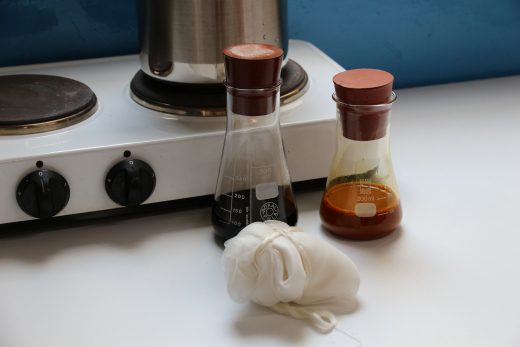
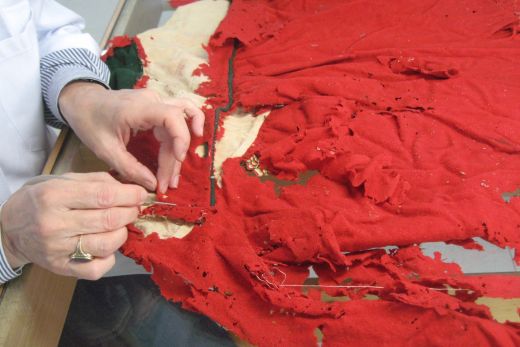
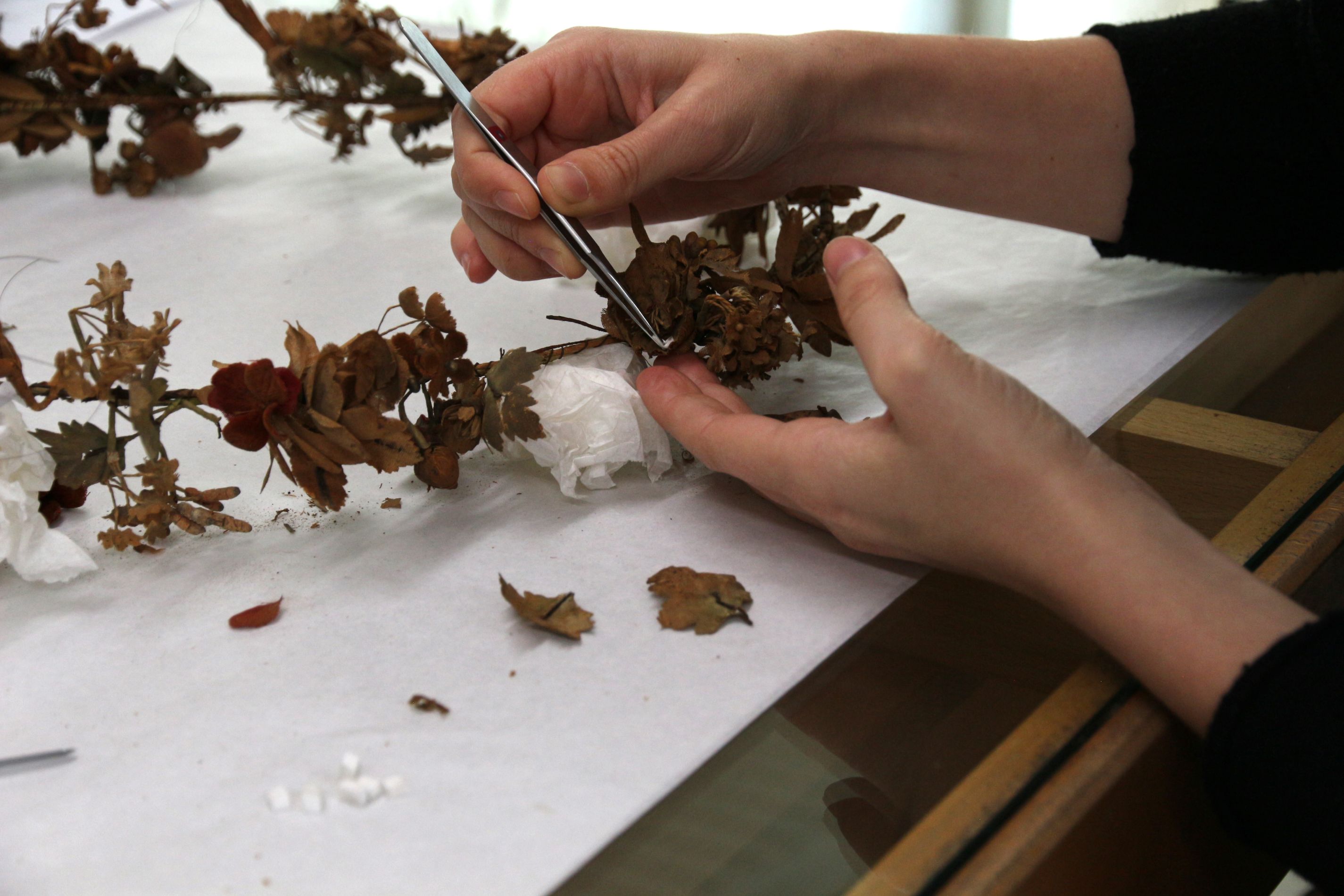
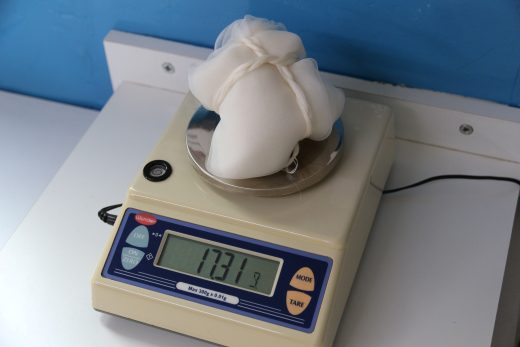
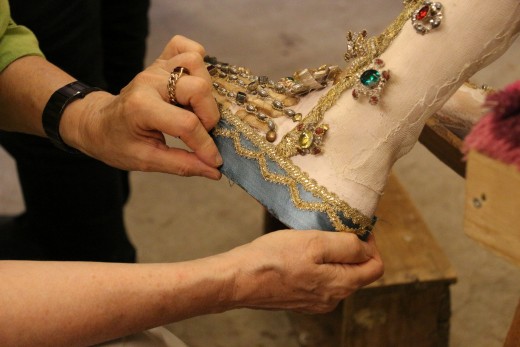
We restore historical textiles using methods that have been established in textile conservation for many decades. This includes dry or wet cleaning, depending on the object. This is followed by securing the damaged areas by sewing, usually with laid thread couching made from thin silk threads, and finally mounting for an exhibition or preparation for storage. All conservation steps are recorded in a written and photographic documentation so that the carried out work can still be traced many years later.


We use high-quality fabrics and threads made from natural fibres as conservation materials. These include various cotton and silk fabrics, which are dyed in all shades in the workshop. The thin silk sewing threads are also dyed to match the respective object. If required, we can procure special materials for specific requirements.
We do not only conserve museum artefacts that are stored under highly protected conditions in a deposit or under glass. It is therefore important to us that we conserve your objects looking at their future use. We will be happy to advise you on suitable storage and the best way to handle your treasures which are still used as part of the customs on special occasions, like flags.
Conservation treatments are often very time-consuming, as the entire process is carried out by hand. Every object is unique and presents different problems. That is why we prepare a cost estimate before the work begins and discuss it with you in order to offer you the best deal for the preservation of your textile object. We will also be happy to advise you on funding opportunities from the heritage office.
Whether it's a personal textile treasure, such as your great-grandparents' traditional costume, or a valuable museum piece, we treat all objects with the same care.