
Before conservation, the catacomb saints in the Church of the Assumption of Mary in Schluderns/Sluderno (IT) hardly visible when entering the church: Located at the very back of the high altar in niches, protected by glass panes and covered with layers of dust.
The conservation was a great success. The dirt and deposits were removed, and the details of their clothing and decorations are now visible again.
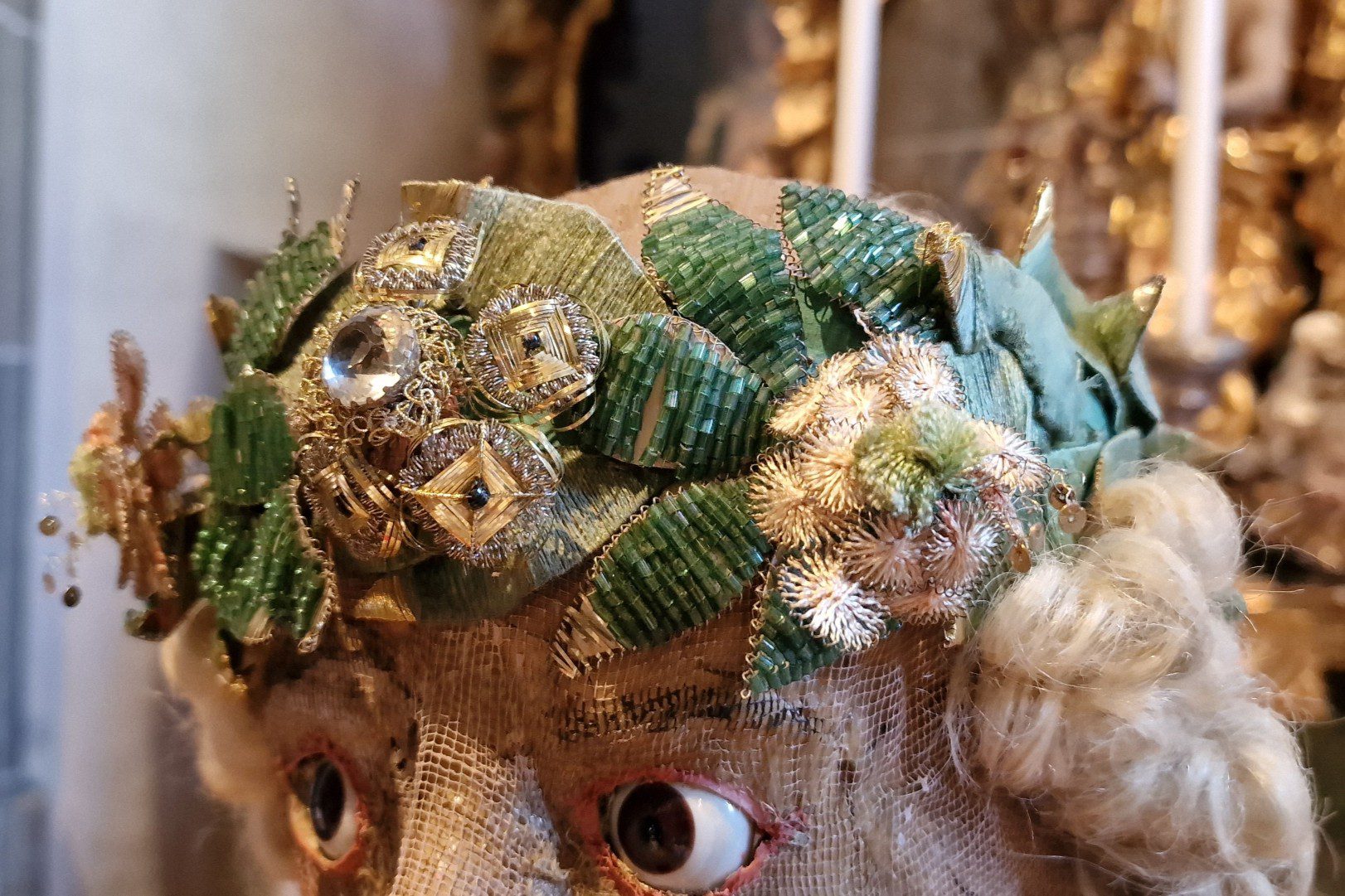
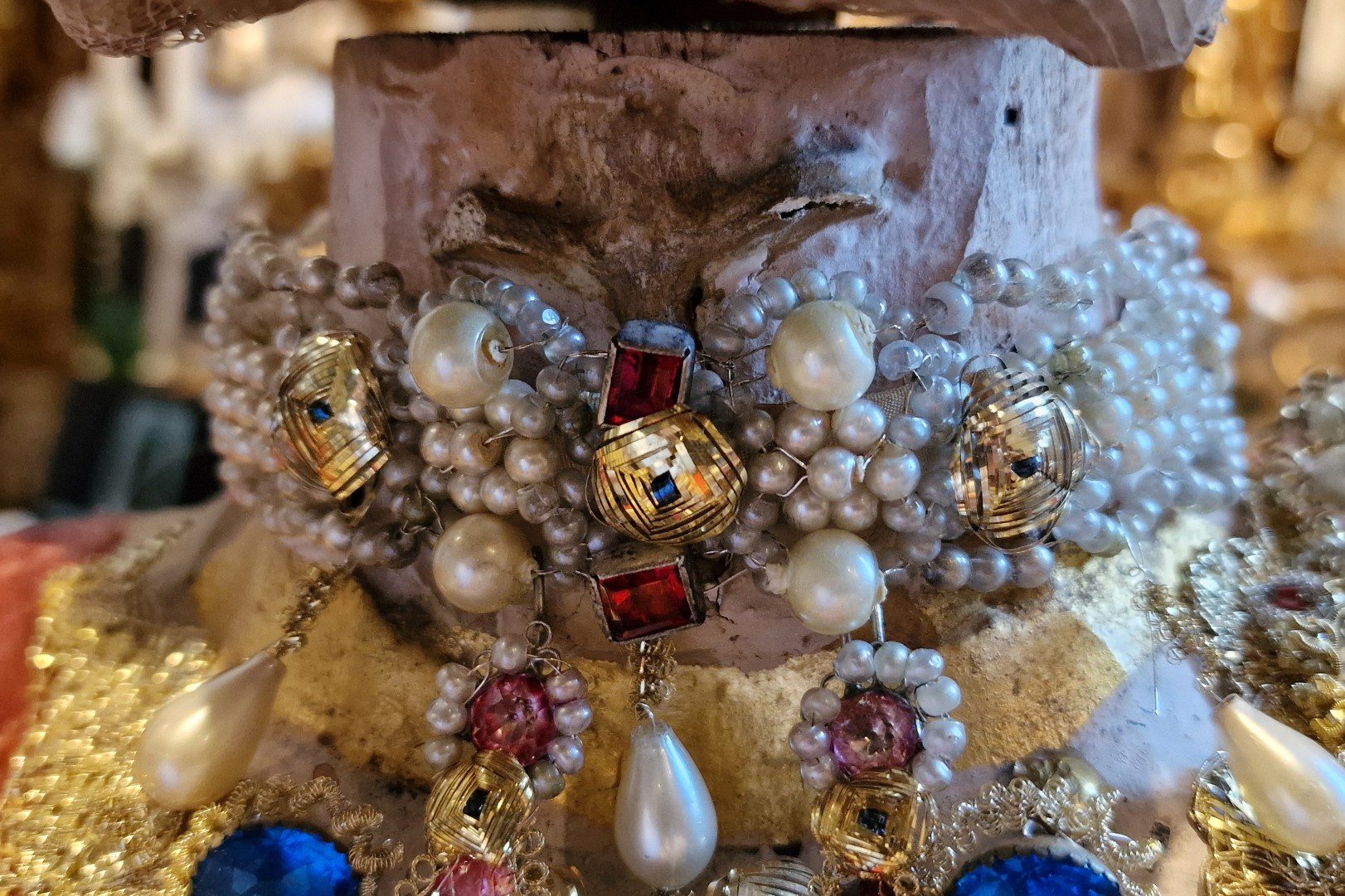
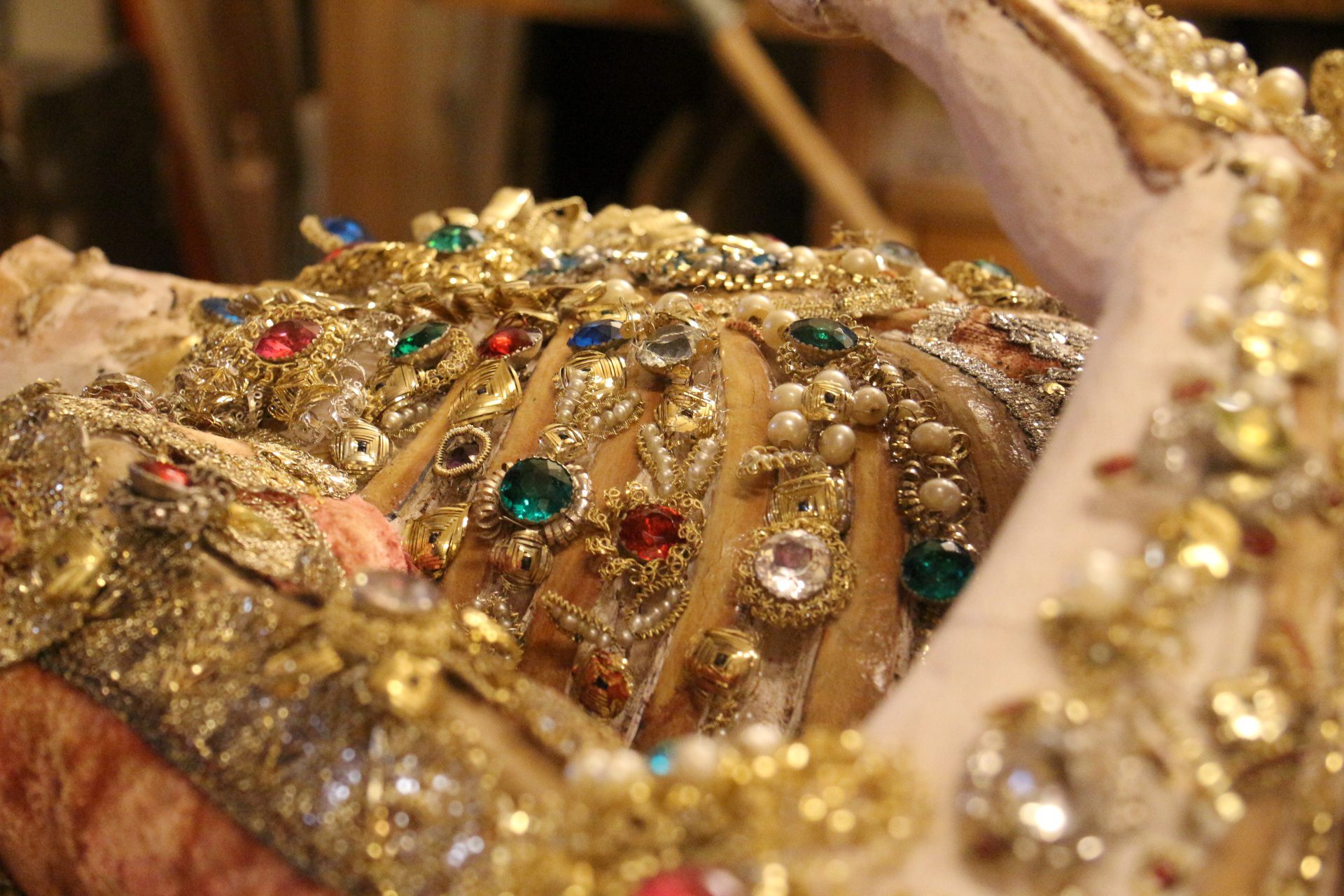
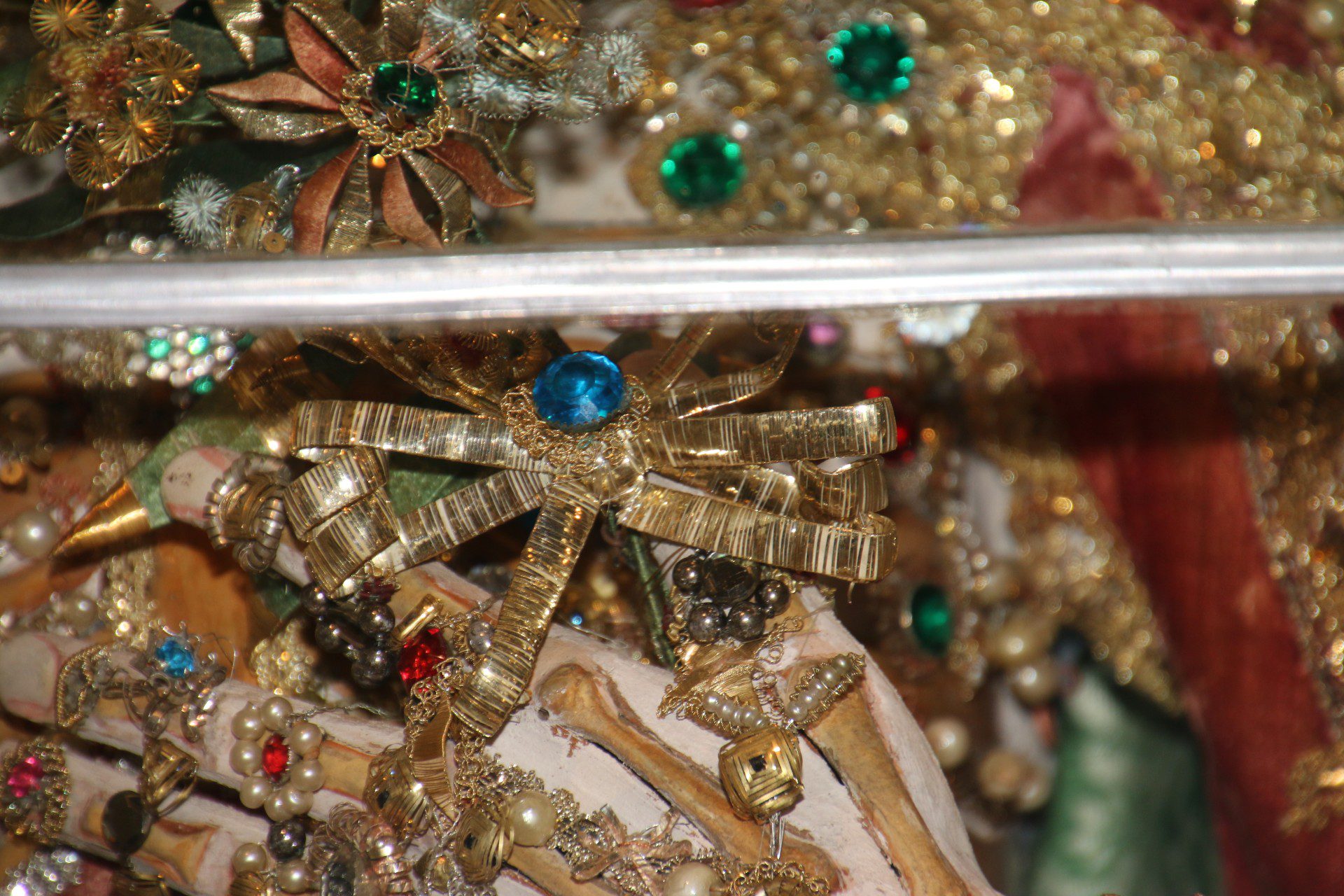
Schluderns/Sluderno is not the only place where so-called „Katakombenheilige“, also known as “Heilige Leiber” can be found. They are present in many churches throughout the northern half of South Tyrol, as well as in Austria and southern Germany, often as part of altar structures.
The period during which these relics were brought from Rome to South Tyrol as objects of veneration was a turbulent one. The Counter-Reformation was in full swing, as the Church in Rome struggled to maintain its power in Europe following the spread of the Reformation.
The rediscovery of the catacombs beneath the streets of Rome at the end of the 16th century was interpreted as a sign from God: a tangible proof of the existence of early Christian martyrs and thus a legitimization for the Roman Catholic Church.
To strengthen faith in regions influenced by the Reformation, these relics were transported from Rome. At their destinations they were often decorated by nuns with fabrics, trimmings, and fine decorations, transforming them into special devotional objects.
Today this type of devotional object is difficult to understand. This may explain why they have partly fallen into obscurity: sometimes covered and visible only on major feast days, sometimes so dusty that they appear greyish, with the shiny decorations made out of wire, threads, paper and glass stones no longer visible.
In the Church of the Assumption of Mary in Schluderns/Sluderno (Vinschgau/Val Venosta, IT) there is a high altar featuring four catacomb saints. The Baroque altar was not originally made for this church; it once belonged to an altar in the nearby Marienberg Monastery. For this reason, only part of the altar is now located in the church at Schluderns/Sluderno.
The four catacomb saints are placed in niches with glass coverings.
St. Theodorius and St. Victorius stand in the outer niches on the left and right, while St. Benedictus and St. Fidelis kneel in the two central niches.
All four carry a sword and a branch as insignia, are “dressed” in a soldier’s coat and cloak, and are richly decorated.
The many delicate decorations on the bodies and clothing of the catacomb saints — created using a wide variety of techniques — posed a particular challenge during the conservation. Each individual element had to be removed, conserved, and then reattached in exactly the same place.
The decorations contain a wide range of materials: precious silk fabrics, elaborately crafted metal trimmings, fine gold and silver wires, colorful glass stones, and artificial pearls. In addition to textiles, the materials include metal, glass, wax, paper, and even horsehair used for the wigs.
At the beginning of the conservation, the individual elements were carefully removed. They had been fixed to the wooden figures with nails. Careful documentation of their original positions was essential for the later reassembly.
Depending on their material, the soiled elements were cleaned either dry or wet, laid out and dried, and where necessary stabilized using sewing techniques. Finally, all parts were reattached in their original positions, and the figures were placed back on their pedestals and in the niches of the church.
The conservation work was completed in July 2025. Since then, the catacomb saints can once again be viewed in the parish church in Schluderns/Sluderno.
On feast days and during visits to the church, the saints are illuminated so that the fabrics and decorations can be clearly seen.
Schluderns/Sluderns is located in the valley Vinschgau/Val Venosta and can be reached from Meran/Merano by train. A visit to the catacomb saints can easily be combined with a visit to the VUSEUM, which hosts several exhibitions about the culture and history of the region.

